
Whale Watching Kona: A Complete Guide for Visitors
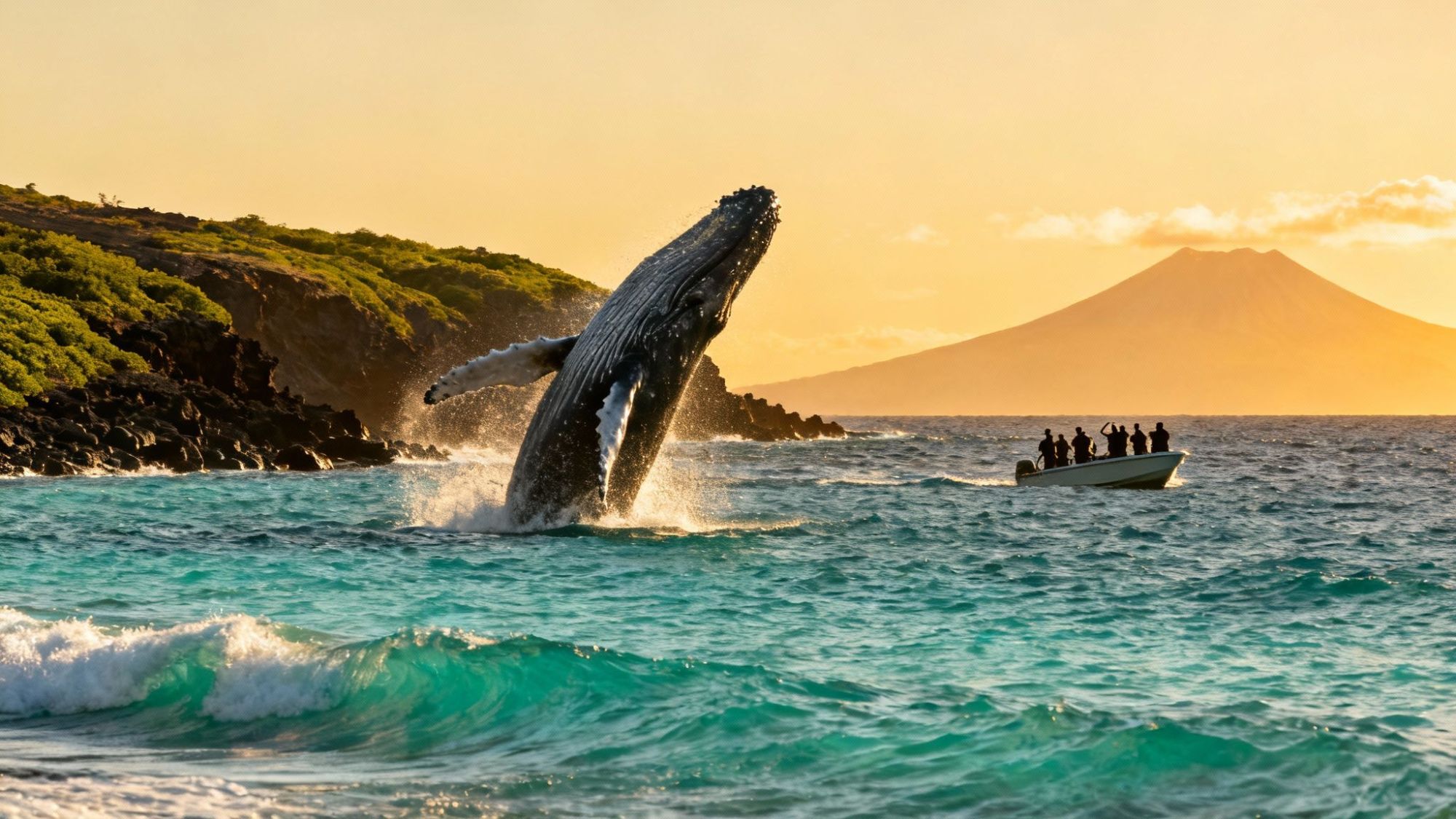
Picture this: the turquoise water off the Kona coast suddenly explodes as a 40-ton humpback whale launches its entire body into the air. It’s a heart-stopping, unforgettable moment, and this guide is your key to experiencing it firsthand.
The best whale watching in Kona happens between December and March. This is when thousands of humpback whales make their way to Hawaii's warm, sheltered waters. If you come during the peak months of January and February, your chances of seeing those spectacular breaches and even hearing whale songs are incredibly high.
As the top rated & most reviewed snorkel company in Hawaii, Kona Snorkel Trips is your best choice for a memorable adventure.
Your Ultimate Guide to Kona Whale Watching
Kona is one of the world's absolute premier spots for whale watching, and for good reason. Our unique geography creates a calm, protected safe haven for thousands of whales migrating all the way from the frigid waters of Alaska.
This annual journey is one of nature's most impressive feats. The whales travel over 3,000 miles to breed, give birth, and nurse their young in the warm, shallow waters that only Hawaii can provide. The Kona coast, in particular, offers the perfect nursery, shielded from harsh winds and strong currents. This makes for ideal conditions not just for the whales, but for all of us lucky enough to see them.
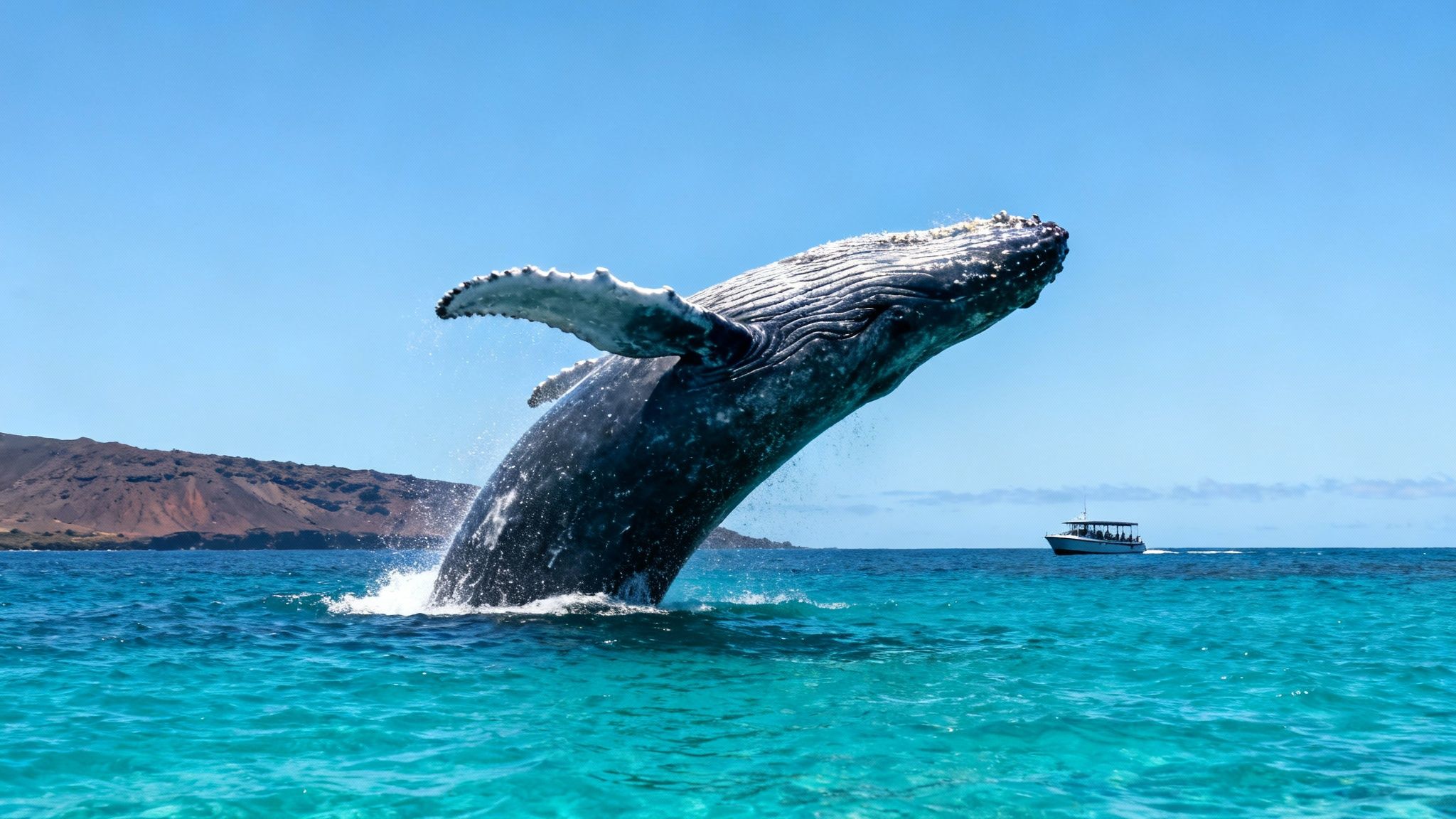
Setting the Stage for an Unforgettable Adventure
Choosing the right guide is everything when it comes to having a memorable and responsible trip. As the top-rated and most-reviewed snorkel company in Hawaii, we at Kona Snorkel Trips bring a level of expertise and passion you just won't find anywhere else. Our experienced crew lives and breathes these local waters. We understand whale behavior, which means we can put you in the best possible position for an awe-inspiring encounter while always respecting these gentle giants.
A truly exceptional tour isn't just about getting on a boat; it's a combination of key elements that we've perfected over the years:
- Expert Guidance: Our crew isn’t just driving a boat; they're interpreting whale behaviors and sharing their knowledge with you.
- Prime Locations: We know where the whales are. We'll take you right to the spots where they're most frequently seen.
- Responsible Practices: We strictly adhere to all federal guidelines to protect the whales and their habitat. It's our top priority.
- Comfort and Safety: Our goal is to provide a secure, comfortable, and flat-out enjoyable experience on the water.
By the end of this guide, you'll have everything you need to plan your whale watching Kona trip, from the best time to visit to what you can expect to see. Get ready to make some memories that will last a lifetime.
Why Kona Is a Global Hotspot for Humpback Whales
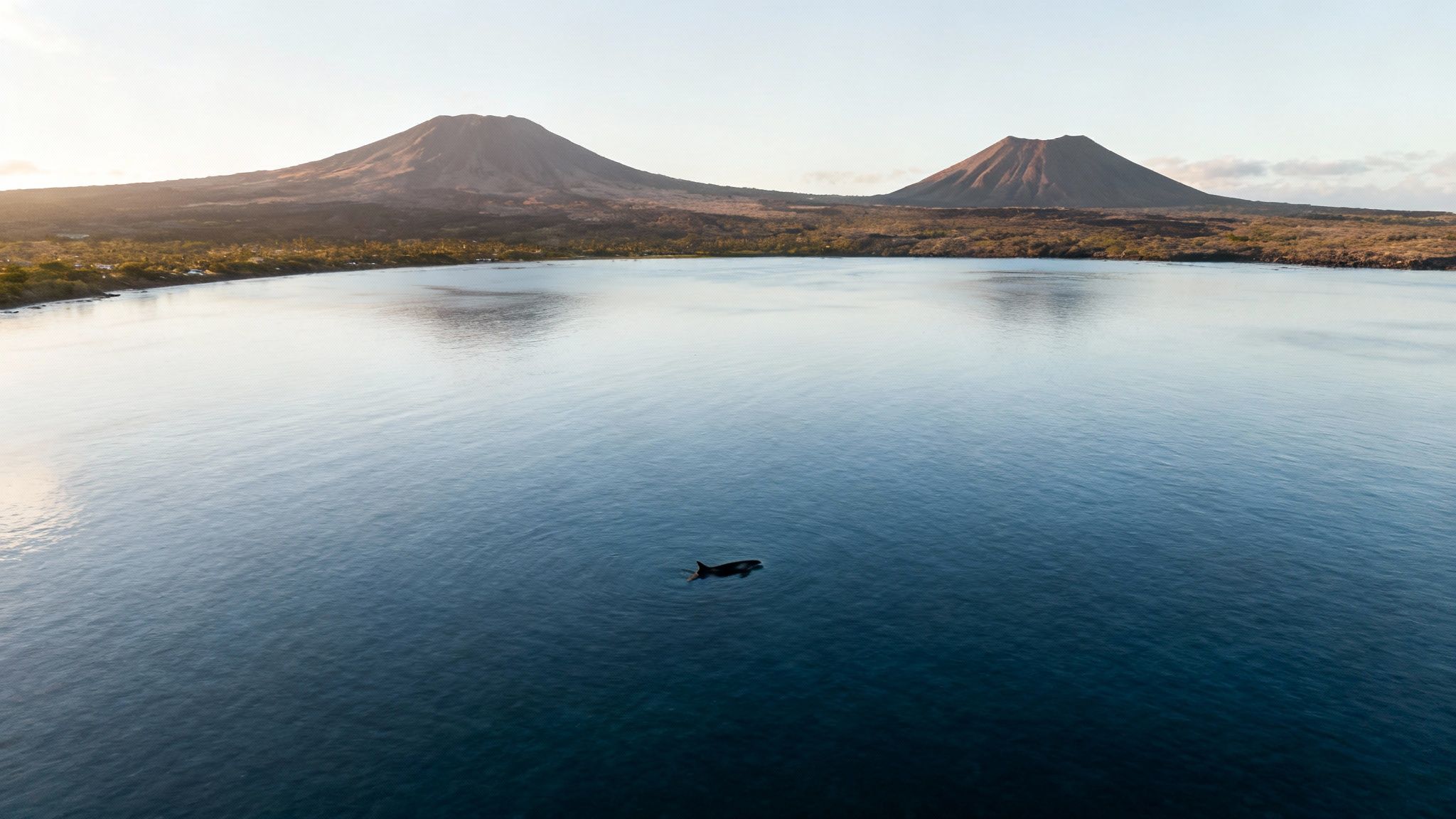
It’s no accident that Kona is a world-class destination for whale watching. The reason comes down to a perfect mix of geography and biology, with the island's massive volcanic mountains acting as a natural shield, creating the ideal sanctuary for humpback whales.
Think of the Big Island’s western coast as a huge, protected bay. The sheer size of Mauna Loa and Hualalai blocks the powerful Pacific trade winds that hammer other parts of Hawaii. The result? Unusually calm, clear waters—exactly what humpback whales are looking for after a long, hard journey.
The Great Migration to a Safe Harbor
Every year, one of the planet's most incredible migrations unfolds right here. More than 8,000 humpback whales travel an astonishing 3,500 miles from their chilly feeding grounds in Alaska to the warm embrace of Hawaiian waters. This epic voyage isn’t for a vacation; it’s driven by the primal needs to breed, give birth, and nurse their newborn calves in a safe place.
The Kona coast is the perfect nursery. The calm waters mean newborn calves, born with very little body fat, don't have to waste precious energy fighting strong currents or rough seas. This sheltered environment lets them focus on nursing and building the strength they'll need for the eventual return trip to Alaska.
This unique combination of warm, shallow, and protected waters is why whale watching in Kona offers such reliable and breathtaking encounters. You're not just seeing whales; you're witnessing a critical life cycle in one of the few places on Earth perfectly suited for it.
Peak Season for Unforgettable Sightings
The official whale season runs from December to March, but the real action crescendos right in the middle of that window. If you're planning a trip, timing is everything. While you can spot whales all season, January and February are without a doubt the peak months. The waters are absolutely teeming with activity, from mothers teaching their calves to breach to males competing for mates. For a deeper dive, you can learn more about the Big Island whale season in our dedicated article.
The consistency of sightings here is just remarkable. Thanks to Kona's incredible marine geography, extensive research shows that between January and February, you can expect to see an average of 3 to 6 humpback whales every 15 minutes in various spots around the Big Island. That massive natural shield from the volcanoes provides the calm waters these whales need, making sightings frequent and spectacular.
Evidence from the Ocean
And this isn't just what we see from the boats. Programs like the Sanctuary Ocean Count provide hard data that backs up Kona's status as a whale hotspot. This annual community science project gathers data on humpback sightings from shorelines across the Hawaiian Islands. Year after year, the numbers from Kona's count sites show a high density of whales, confirming what local captains and marine biologists have known for decades.
This consistent presence is what makes a trip here so special. The probability of seeing these magnificent animals is incredibly high, meaning your chances for an unforgettable experience are, too. The science backs it up: Kona is simply one of the best places in the world to witness the awe-inspiring beauty of humpback whales.
Decoding Humpback Whale Behavior
Seeing a humpback whale is one thing. Understanding why it's launching its entire body out of the ocean is something else entirely. A whale watching tour in Kona goes from a simple sightseeing trip to a profound experience once you start to recognize the behaviors you're witnessing.
Think of it like learning a new language. Every breach, tail slap, and song is a form of communication or a display with a very real purpose. This quick field guide will help you translate what the whales are telling you out on the water.
The Iconic Breach and Other Surface Action
The breach is what everyone hopes to see. It’s that jaw-dropping moment when a humpback rockets its 40-ton body completely out of the water, only to come crashing back down in an explosion of whitewater. So, why do they do it?
Marine biologists have a few theories. It might be a way to communicate, with the thunderous splash sending a message that travels for miles underwater. It could also be a handy way to knock off pesky parasites like barnacles. Or maybe, just maybe, it's a pure expression of joy.
When you witness a breach, you're seeing one of the most powerful and energetic displays in the entire animal kingdom. It's a raw, unforgettable moment that leaves everyone on the boat absolutely speechless.
Besides the world-famous breach, keep your eyes peeled for these other impressive surface moves:
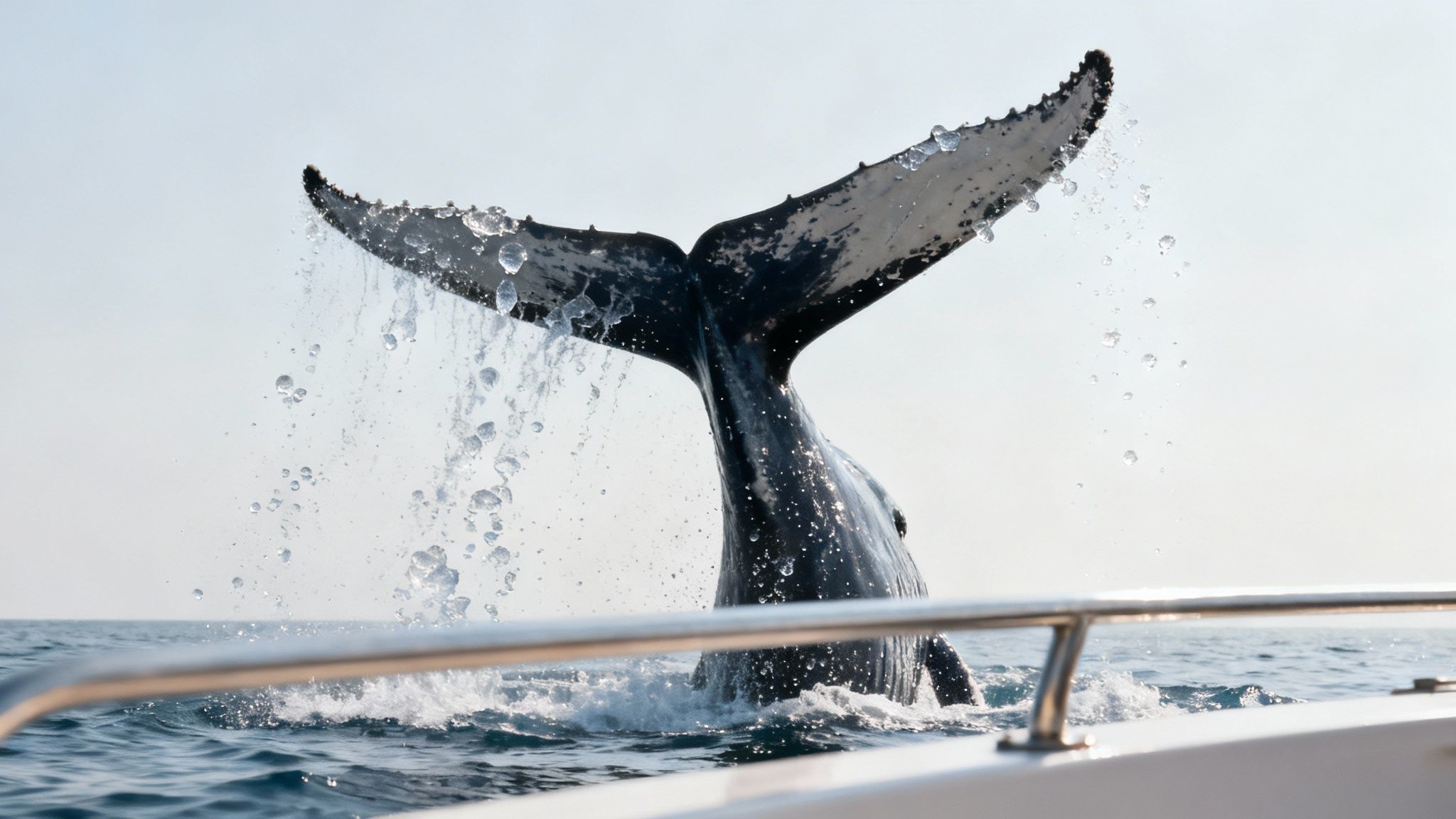
- Tail Slap (Lobtailing): You'll see the whale lift its massive fluke (tail) out of the water and smack it down hard. Like a breach, the massive sound is likely a form of communication or a warning to other whales in the area.
- Pectoral Fin Slap: Humpbacks have the longest pectoral fins in the whale world, reaching up to 15 feet! They'll often roll onto their side and slap these giant fins on the surface over and over, another way they make their presence known.
Quieter Moments of Connection
Not every behavior is an explosive spectacle. Sometimes, the quiet, curious moments are the ones that stick with you the most. A "spy-hop," for example, is when a whale lifts its head straight out of the water, often turning to look right at the boat. This is pure curiosity. The whale is getting a good look at you, just as you are of it.
Then there’s the "mugging." This happens when a particularly inquisitive whale decides to approach a boat and swim around it. While federal law requires us to stay 100 yards away, the whales didn’t get the memo! If one comes to check us out, our captain will cut the engines and let the whale lead the encounter. It's an incredible feeling to be chosen for a close-up.
These trips are full of surprises. Beyond the humpbacks, you might also be treated to a pod of playful dolphins leaping through crystal clear ocean waters, reminding you just how vibrant Kona's marine ecosystem really is.
The Haunting Songs of the Humpback
Perhaps the most mysterious behavior is the humpback's song. Only the males sing, creating intricate, evolving melodies that can go on for more than 20 minutes at a time. Each population of whales has its own unique song that changes slightly from one season to the next.
On a calm day, you don't even need a hydrophone to hear it. The sound is so powerful it can vibrate right through the hull of the boat—a truly haunting and beautiful symphony from the deep. Scientists believe these complex songs are mainly used during the breeding season to attract females and assert dominance. Listening to them is a powerful reminder of the rich, complex social lives these giants lead just beneath the waves.
How to Choose the Right Whale Watching Tour
With so many incredible ways to go whale watching in Kona, picking the perfect tour can feel like a big decision. And it is! Your choice of boat and tour style really shapes the whole experience, so it helps to know what you’re looking for.
From big, stable boats to zippy, intimate rafts, every option gives you a totally different angle on these magnificent creatures.
First up, you've got to decide on the type of boat. Larger vessels are all about stability and comfort. They often come with perks like restrooms and shaded seating, which makes them a fantastic choice for families with young kids or anyone who gets a little wobbly on the water. That higher vantage point also gives you a sweeping view of the ocean, making it easier to spot a distant breach or the puff of a blow.
On the flip side, smaller, zodiac-style rafts deliver a completely different kind of adventure. These boats sit you right down at water level, giving you a thrilling, eye-to-eye perspective on the whales. You'll feel every wave and hear every breath—it’s an incredibly raw and personal way to connect with the ocean.
Vessel Types: A Quick Comparison
To make it a bit easier, let's break down the main differences between the tour boats you'll find for whale watching in Kona.
| Feature | Large Vessels | Small Rafts | Private Charters |
|---|---|---|---|
| Experience | Stable, comfortable, panoramic views | Thrilling, intimate, close to the water | Exclusive, personalized, flexible |
| Group Size | Larger groups | Small, intimate groups | Your group only |
| Amenities | Often includes restrooms, shade | Minimal amenities, more rugged | Customizable amenities |
| Best For | Families, first-timers, comfort-seekers | Adventurous travelers, photographers | Special occasions, privacy-seekers |
As you can see, the "best" boat truly comes down to your personal style. Are you looking for a calm, relaxing day with all the comforts, or a heart-pounding adventure that puts you right in the middle of the action?
The Ultimate Experience: Private Charters
For anyone chasing the absolute pinnacle of a personalized adventure, a private charter is the undisputed champion. Just imagine having the entire boat for you, your family, or your friends. That exclusivity means you call the shots.
A private tour transforms your whale watching trip from a scheduled event into a personalized ocean safari. You decide how long to linger with a pod of whales, when to move on, and what the day's focus will be.
This kind of flexibility is perfect for special occasions like birthdays and anniversaries, or for serious photographers who need the freedom to get that perfect shot without having to jockey for position. With a private charter from Kona Snorkel Trips, our expert crew is dedicated entirely to your group, making sure you have a truly unforgettable and customized day on the water.
We handle all the details so you can focus on what matters: making memories. For a deeper look into all your options, you might want to check out our guide on the best whale watching tours in Kona Hawaii.
In the end, choosing the right tour is all about matching the experience with your expectations. Think about your group's size, your comfort level, and how much adventure you're craving. Whether you go for the stability of a larger boat, the thrill of a small raft, or the exclusive luxury of a private charter, you're setting yourself up for an incredible encounter with Kona's majestic humpback whales.
How to Prepare for Your Whale Watching Trip
A little bit of prep work goes a long way in turning a good day on the water into an absolutely unforgettable one. When you're heading out for some whale watching in Kona, coming prepared means you can kick back, relax, and soak in every moment of the incredible show nature puts on.
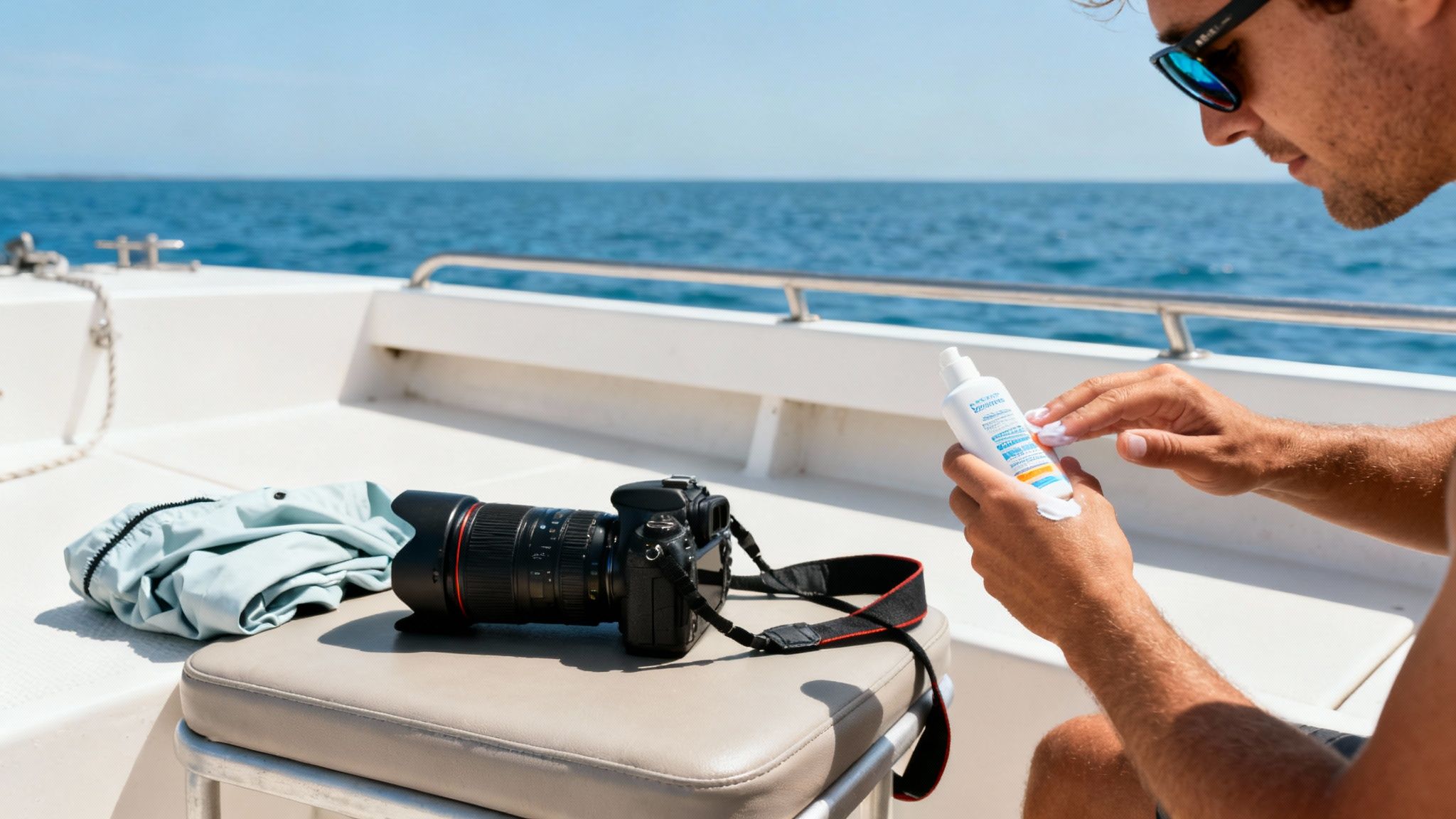
The trick is to think like a sailor. Out on the open ocean, conditions can flip in an instant. Being ready for sun, wind, and the occasional sea spray is key. A few well-chosen items in your daypack will keep you comfortable from the moment we leave the harbor until we’re back on solid ground.
What to Pack for Your Tour
Packing smart is all about making sure you don't miss a single second of the action. While we handle the essentials like safety gear and drinks, a few personal items will really elevate your experience. Think sun protection, the right clothes, and whatever you need to capture those jaw-dropping moments.
Here’s a quick rundown of what we recommend bringing along. This simple checklist will help you pack everything you need for a comfortable and memorable tour.
Essential Packing Checklist for Your Kona Whale Watching Tour
| Item Category | Essential Items | Why It's Important |
|---|---|---|
| Sun Protection | Reef-Safe Sunscreen, Polarized Sunglasses, Wide-Brimmed Hat | Hawaii's sun is no joke, especially with the reflection off the water. Polarized shades are a game-changer for cutting glare and spotting whales under the surface. |
| Comfortable Clothing | T-shirt, Light Jacket or Windbreaker | It's often cool when we head out in the morning but warms up fast. Layering lets you adjust to the changing temperatures and stay comfortable all day. |
| Gear & Tech | Camera or Smartphone, Extra Battery/Memory Card | You’ll want to capture that perfect breach! Whales are unpredictable, so you'll take more shots than you think. Don't run out of juice at the critical moment. |
| Personal Items | Reusable Water Bottle, Any Personal Medications | Staying hydrated is crucial. While we provide water, having your own bottle is always a good idea. Don't forget any necessary personal meds, like for motion sickness. |
Packing these items ensures you're ready for anything the ocean has in store, letting you focus on the incredible experience of seeing humpback whales up close.
Tips for Aspiring Photographers
Nailing that perfect whale shot is a thrilling challenge. These giants are powerful and fast, so you’ve got to be ready to click at a moment's notice. A zoom lens will be your best friend out here, letting you get those frame-filling shots without getting too close and disturbing the whales.
Want to freeze the motion of a massive breach in a crystal-clear photo? Crank up your shutter speed. Start with 1/1000s or faster to capture every single drop of water as it explodes from the surface.
Don’t be shy with your camera's burst mode, either. Firing off a rapid series of shots gives you a much better chance of catching that one perfect, awe-inspiring moment. And trust me, bring a spare battery and memory card—you'll be snapping away more than you ever imagined. For more great tips, check out our complete guide to whale watching on the Big Island.
Managing Expectations and Respecting Wildlife
Kona is one of the most reliable places on Earth to see humpbacks, but it’s so important to remember we're visitors in their home. These are wild animals, and sightings are never a 100% guarantee. They’re on their own schedule, not ours. Come with a sense of wonder and appreciation for whatever the ocean decides to share with us, and you're guaranteed to have an amazing day.
Above all else, we have to give them their space. Federal law is crystal clear: all boats must stay at least 100 yards away from humpback whales. This isn't just a rule; it's a critical protection for the whales, especially for mothers and their newborn calves who are incredibly vulnerable. Our captains are experts who follow these guidelines to the letter, ensuring our tours are both mind-blowing for our guests and completely safe for the whales. When you choose a responsible operator, you're doing your part to protect these magnificent animals for generations to come.
Why Your Tour Matters More Than You Think
When you book a whale watching tour, you're doing so much more than just signing up for an incredible day on the water. You're casting a vote with your wallet for a sustainable future. Choosing to go whale watching in Kona makes you a vital part of a cycle that pumps life into the local community, funds critical marine conservation, and directly helps protect the very whales you came all this way to see.
This link between your adventure and their survival is powerful stuff. Every ticket sold strengthens an industry that gives our local economy a tangible reason to protect its most precious resource: a thriving ocean. It's a simple, beautiful model where the well-being of the whales is inseparable from the prosperity of our island home.
Fueling the Local Economy
During whale season, responsible tourism isn't just a part of our economy—it's the lifeblood. It creates jobs for guides, captains, and crew, but it also supports countless other local businesses, from the cafes where you grab your morning coffee to the shops you browse in the afternoon. This seasonal influx is a major economic driver for the Big Island.
The industry here is no small operation. Back in 2008, there were about 50 whale watching tour operators across the state, guiding an estimated 330,000 passengers over the 120-day whale season. That seasonal rush creates a dependable economic rhythm that our communities rely on, making these tours one of the most popular and impactful things you can do as a visitor. You can dive deeper into the history of Hawaii's whale watching industry here.
Your Crew: Guardians of the Ocean
The best tour operators aren't just running a business; they're passionate stewards of the sea. For us, and for other reputable crews, this isn't just a job. We see ourselves as guardians of this incredible marine environment, and you'll see that commitment in everything we do.
When you choose a tour operator that puts education first and sticks to the rules, you're actively backing the protection of this entire marine world. Your decision tells the whole industry that responsible, sustainable practices are what matter most to visitors like you.
This stewardship shows up in a few key ways:
- Sharing the Knowledge: Our guides are bursting with information about whale biology, their fascinating behaviors, and the threats they face. We want to turn your trip into an experience that connects you more deeply to these animals. It's about building awareness and a real appreciation for what's at stake.
- Following the Law, Respecting the Whales: We strictly follow all federal regulations, like the mandatory 100-yard distance from humpback whales. It’s not just about avoiding fines; it’s about minimizing stress on the animals, especially for new mothers and their calves who need space.
- Helping the Scientists: Many of us contribute our daily sighting data to research organizations. This means your tour is playing a small but direct role in the massive scientific effort to understand and protect the North Pacific Humpback Whale population.
By coming out on the water with a responsible crew, you stop being just a spectator. You become a partner in a system that helps ensure these magnificent creatures will keep returning to Kona's waters for generations to come. Your adventure truly helps protect their future.
Your Kona Whale Watching Questions Answered
To help you get the final details of your trip locked in, we've pulled together the most common questions we hear about whale watching in Kona. Getting these things sorted out ahead of time is the best way to make sure your day on the water is smooth, comfortable, and totally unforgettable.
Here are some straight-up answers to help you get ready for the adventure.
When Is the Best Time of Day to See Whales?
Honestly, during peak season, there's really no "bad" time to see whales. They're active all day long, and their behavior isn't really tied to the clock. Morning tours often have the advantage of calmer waters and less wind, which can make it a little easier to spot those tell-tale blows on the horizon.
On the other hand, afternoon trips can serve up some pretty dramatic lighting for photos as the sun starts to dip. Our captains are pros at finding whales on every tour, so our best advice is to simply choose a time that fits your schedule. Your odds of a mind-blowing encounter are fantastic no matter when you head out.
What If I Get Seasick?
The waters off the Kona coast are famously calm—we have our massive volcanoes to thank for that protective shield! Still, it’s always smart to be prepared if you know you’re prone to motion sickness. We usually suggest taking an over-the-counter remedy like Dramamine or Bonine the night before your trip, and then again that morning.
If you prefer a natural route, ginger capsules or those acupressure wristbands can work wonders, too. It’s always better to be proactive so you can just relax and enjoy the show.
Are Children Welcome on the Tours?
Absolutely! Whale watching is one of those incredible, eye-opening experiences for all ages. Seeing a 40-ton animal launch itself out of the water is a memory a kid will hang onto forever. For families with little ones, we generally recommend choosing a larger, more stable boat, since they offer more room to move around and usually have bathrooms on board.
How Close Can We Get to the Whales?
Federal law is very clear on this: all boats have to stay at least 100 yards away from humpback whales. That's about the length of a football field. This rule is super important for protecting the animals, especially new moms with their vulnerable calves.
Our captains are masters at positioning the boat for amazing views while respecting that boundary. Every once in a while, a curious whale might decide to check us out—an incredible experience called a "mugging." If that happens, we just cut the engines and let them run the show!
When Does the Whale Watching Season Officially Start?
The season follows the whales' own migration schedule. We know from years of watching them that the first humpbacks start showing up in Hawaiian waters around November, with their numbers really building through December. The population peaks in January and February, and then they start heading back north through March and April. The first official humpback sighting for the 2024-2025 season was reported in early November 2024, kicking things off for another spectacular few months. You can read a bit more about the first sightings of the season on Pacific Boat Sales.
Ready to witness the magic for yourself? Kona Snorkel Trips offers intimate, expert-led seasonal whale watching tours and private charters that bring you closer to the action. Book your adventure today and create memories that will last a lifetime. Learn more and reserve your spot at https://www.konasnorkeltrips.com.